Until the recent past, mineral exploration was conducted using 2D computer programs or physical maps spread on tables, attempting to gain depth through drill section prints. Due to technical limitations, many projects managed this way missed significant mineralization. Today, to make deep discoveries and revitalize overlooked projects, the entire process must be evaluated within a comprehensive 3D environment from start to finish.
Mineral discovery is not a matter of luck; it is probability management. Build your strategy on the following four pillars:
Mining investment requires technical foresight, determination, and adherence to a defined strategy as much as capital. A successful start requires a strong license portfolio. In Turkey, mineral rights are state-owned and coordinated by MAPEG (General Directorate of Mining and Petroleum Affairs). The primary ways to acquire licenses are as follows:
Complete this checklist before acquiring licenses or initiating an exploration investment:
A technical due diligence performed by independent experts before acquiring interested sites or proposed licenses is extremely important. Having an idea of the true value of the site you are interested in or the site you are putting up for sale will allow you to benefit from opportunities and prevent potential disappointments.
It would be beneficial to take a look at our following articles on mineral exploration.



Mining license acquisition in Turkey is governed by Mining Law No. 3213 under the control of MAPEG (General Directorate of Mining and Petroleum Affairs). The primary ways to become a license holder are as follows. These methods involve different legal and operational processes; investors must consider both regulatory requirements and technical/financial risks when deciding which path to take.
Acquisition via Tender: Vacant areas or those whose exploration periods have expired are opened for tender by MAPEG at certain periods. Tender announcements are followed, collateral is deposited, and the individual or company with the highest bid—usually in a sealed-bid auction—wins the right to the exploration license.
Transfer (Contractual Transfer): It is possible to purchase a license with all its rights and obligations from an existing holder. In this process, a transfer contract is made between the parties before a notary, MAPEG approval is obtained, and the transfer fee is paid. The transferee must meet the statutory requirements for holding a mining license (e.g., company articles of association, employing technical personnel).
Royalty (Leasing): Without transferring the ownership of the license, the right to operate a mine can be granted to third parties in exchange for a certain share or rent. In this case, a royalty agreement is signed between the license holder and the operator, and the operator uses the site. This method is considered a "sub-operation" model.
Initial Application (Limited Areas): According to the Mining Law, direct applications can be made for suitable sites for certain mineral groups (e.g., Group I and Group II minerals). If there is no other license overlap in the area, the application is accepted based on priority right. However, today, most valuable sites are included in the tender system.
Mergers and Acquisitions (M&A): Instead of directly taking over the license, it is possible to indirectly own the site by purchasing the shares of the license-holding company. Since this method takes place through share transfer rather than license transfer procedures, it sometimes provides a faster operational transition.
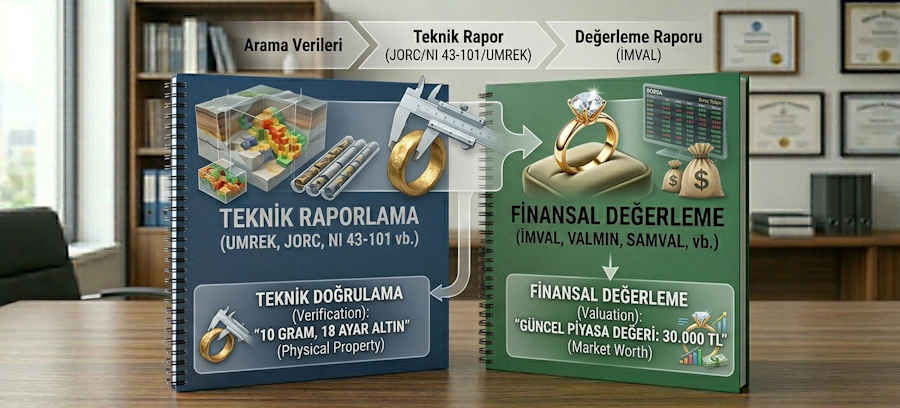
Determining the ore content of mining licenses is of critical importance in license transfer processes, establishing strategic partnerships, and securing banking and investment financing. Evaluation and valuation are presented with two types of reports that have different meanings:
Technical Reporting (UMREK, JORC, NI 43-101, etc.): These international standards, falling under the CRIRSCO umbrella, represent geological and technical reliability. They scientifically verify the tonnage and grade data of the sub-surface ore by auditing every detail, from drilling density to sample analysis (QA/QC) protocols. The primary focus at this stage is "registration of physical existence," and the Competent Persons (QP/CP) preparing the report are responsible for minimizing geological risks.
Financial Valuation (IMVAL): IMVAL (and its global equivalents like VALMIN or SAMVAL) builds a "financial architecture" based on these technical data. IMVAL standards analyze commodity price forecasts, Weighted Average Cost of Capital (WACC), tax regimes, and operational risks (OPEX/CAPEX) in addition to geological data. IMVAL reports are signed by licensed financial experts who have authorization certificates from national authorities (CMB/BRSA) and specialize in mineral valuation.
Workflow: Exploration Data > Technical Report (JORC/NI 43-101/UMREK) > Valuation Report (IMVAL)
The Golden Ring Analogy:
While technical reports seal the physical reality of the mine and tell "how much material is there," IMVAL determines the financial equivalent of this reality for the investor, namely "how much that material is worth."
In summary, enterprises that do not feel the need for an IPO or investment support can make decisions based on technical reports according to their own valuation criteria. Generally, at the acquisition or partnership stage, companies proceed by evaluating the ore potential of the commodity personally from the technical reports.
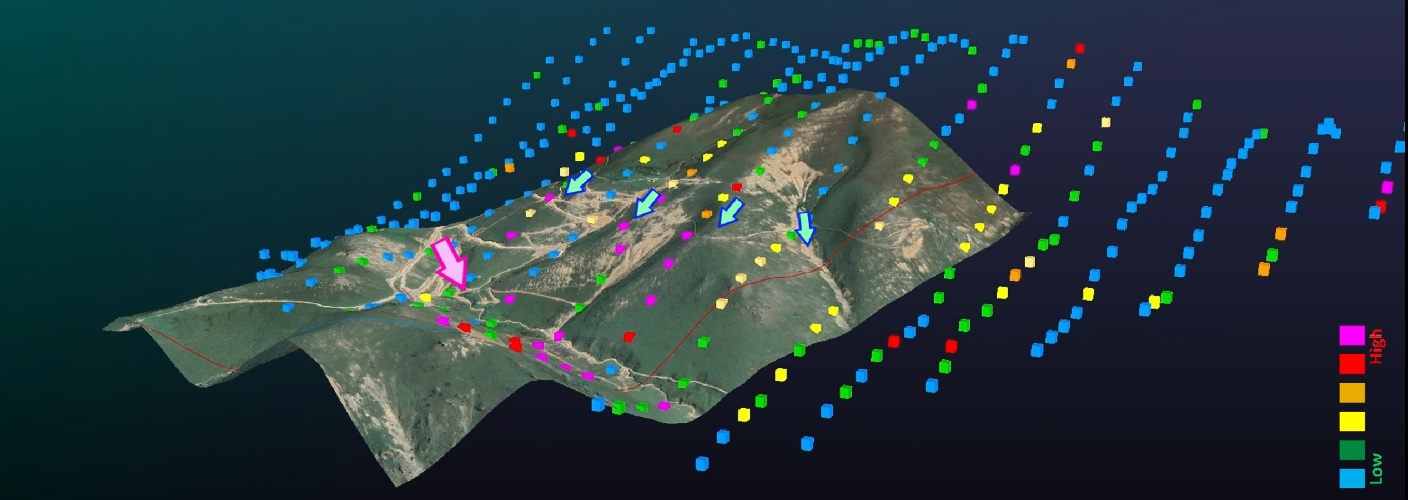
Mineral exploration is the process of passing scientific data through a rational filter and managing high risk with "Start-up" agility. Exploration teams conduct specific studies using the following techniques with their scientific and technical skills to obtain data about the ore resource.
Scientific Infrastructure and Targeting
Field Techniques and Sampling
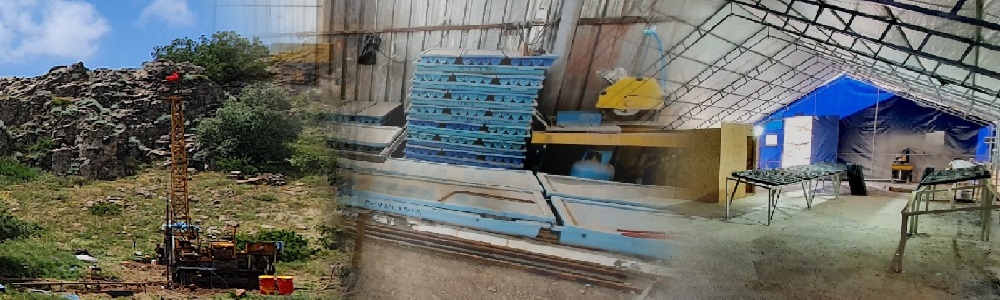
The basic sampling techniques used to prove the existence of mineralization:
Office and Core Yard Studies
Public Relations, Environment, and Finance
Success is; collecting data through correct sampling and drilling, reporting in an international language, and being able to make a technical "Stop-Loss" decision, not an emotional one, if the data is negative.
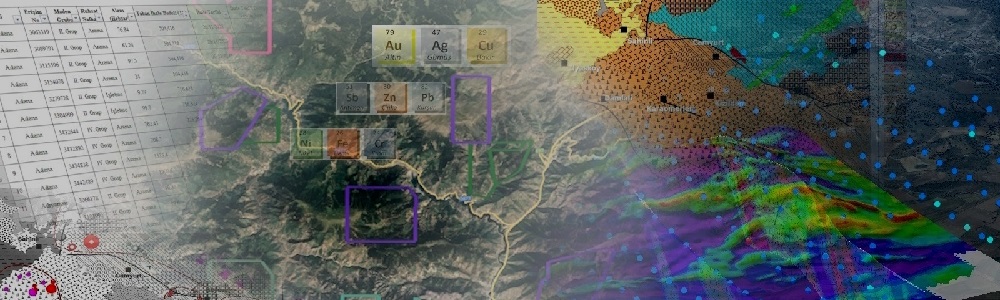
Mineral exploration investments are technical processes that require managing the balance between high risk and return. Success is possible through the synthesis of data accuracy, international standards, and financial discipline.
Technical and Strategic Fundamentals
Operational and Financial Management
Although the subject of mineral discovery with artificial intelligence (AI) has been a very interesting topic recently, AI does not yet fully master all the complex secrets of the earth and exploration geology. At this stage, the value that AI can provide does not seem to go much beyond the models that expert geologists can already produce with field observations, geostatistical methods, and standard 3D computer programs. Algorithms can process data quickly, but geological intuition and correct interpretation of ore deposit formation environments (ground-truthing) are still the most critical factors.
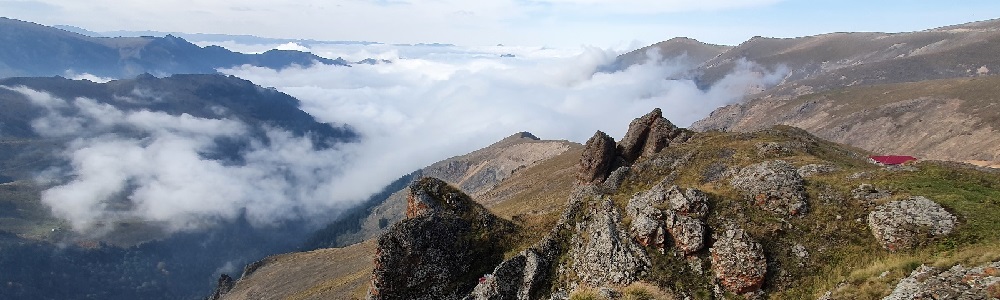
Remote Sensing technologies, which are among the indispensables of the discovery phase, are always in demand. However, the data accuracy and effectiveness of these methods are maximized in "barren lands" where vegetation is weak. In sites where the surface is covered or contains dense vegetation, remote sensing data must be supported by deep geophysical and geochemical studies.
The real element shaping the mining of the future is the energy transition. Investments in lithium, cobalt, graphite, and Rare Earth Elements (REE), which are vital for battery technologies, have become the focus of the sector. There is an important detail here that should not be technically confused: Strategic and Critical Minerals and Rare Earth Elements are not the same thing. While REEs refer to a specific group of elements in the periodic table (lanthanides, yttrium, and scandium), "critical and strategic raw materials" cover all elements that carry a supply security risk and have high economic and technological importance (for example, lithium is not an REE but is a critical mineral).
Today, with increasing global commodity prices and decreasing "cut-off" (grade) values, which are the limit of economic operability, a major rush has begun for low-grade deposits that were not considered economic in the past or have not yet been operated. The fact that near-surface deposits have been largely discovered forces exploration geology to deeper (blind/covered) discoveries. Deep drilling and complex structural models mean more investment cost and more risk, but a much larger gain when successful.
In such a dynamic period with high uncertainties, success comes from managing risk correctly. The most rational strategy for exploration companies and investors is to create the optimum project portfolio by putting the most accurate licenses, which host different mineralization types and whose geological potential has been verified, into the same basket. Developing strategies that can manage the greatest risks with accurate 3D models and geostatistical data, and making it possible to try what has not been done in exploration geology in the past, is the only way to bring success in the mining of the future.
As the life of mines is being depleted and projects are approaching the finale one by one, the sector is now in a relentless race to acquire new licenses not only for growth but also to maintain current production power. Although the price increases accompanying the decreasing commodities offer a strong advantage in this challenging picture, a visionary strategy will create the real difference in this period when new discoveries have receded to the lowest levels in history. Transforming this bottleneck into a ground for opportunity by correctly structuring your mineral exploration portfolio will be the main move that determines the winners of the new era.

Let us determine your ore genesis, draw a roadmap by putting forward the most appropriate concept, and help you correctly implement all exploration elements.

Let us contribute to your selection and implementation of exploration techniques and the evaluation of your sampling results. Let us audit your exploration activities to ensure they are reliable and sound.

Follow our website and social media accounts to be informed about our mineral exploration techniques, mineralization evaluation, and tracking training programs.
You can contact us for collective training requests for your company personnel within the scope of your projects or operations.